Joe McMoneagle Says He Found Russia's Typhoon Sub With His Mind. A Soviet General Believed Him.
The CIA's star remote viewer told the National Security Council about a monster submarine. They called it fantasy. Then they took the photos.
Listen on YouTube · Spotify · Apple Podcasts
 WATCH NOW↓
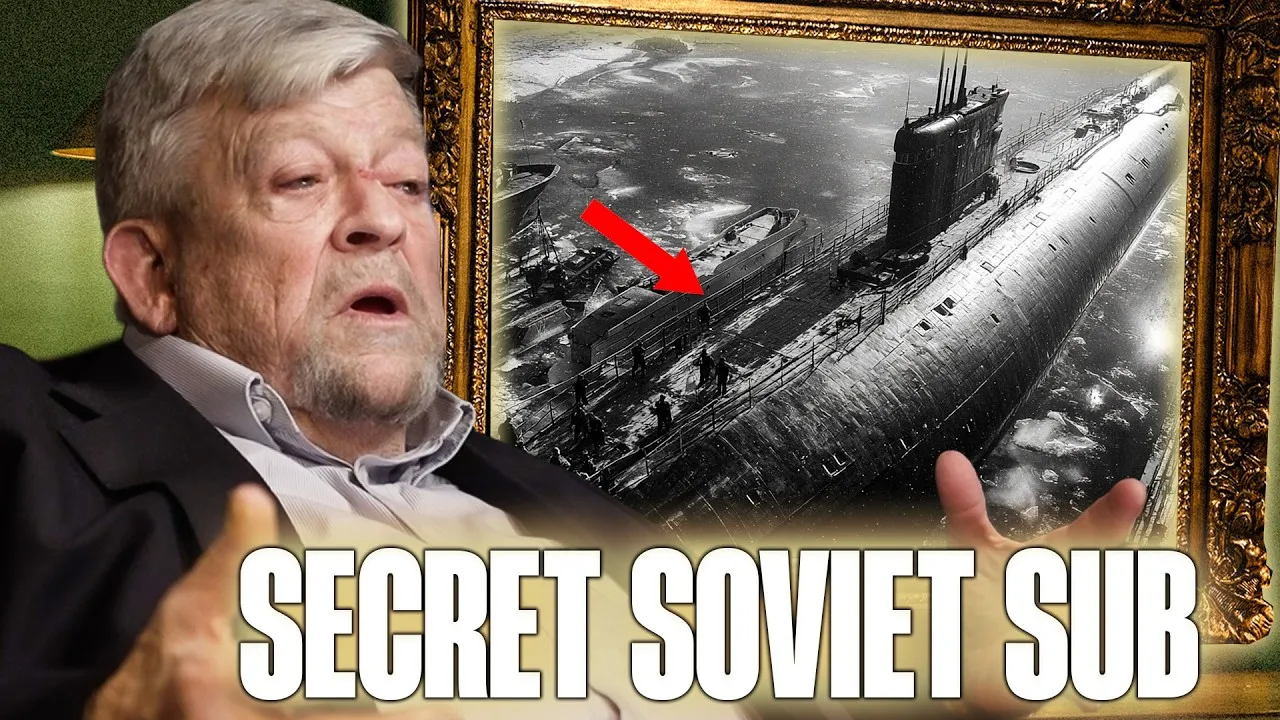
 Joe McMoneagle sat in a room with an envelope he wasn’t allowed to open, across from a monitor who didn’t know what was inside it either, and somehow described a submarine that the National Security Council had spent two years trying to find and couldn’t. The NSC called his report fantasy. Then, 114 days after McMoneagle said to check the harbor, satellite photos showed a freshly cut channel to the sea and the TK-089, the Typhoon-class prototype, tied up right there next to a Soviet aircraft carrier. The CIA’s remote viewing program is one of those Cold War stories that sounds insane until you look at what actually happened, and then it just sounds insane in a different register.
McMoneagle, appearing on the Shawn Ryan Show, walks through the whole sequence with the calm of a man who has told this story enough times to know which parts make people’s heads tilt. The target was the largest building north of the Arctic Circle, a cold harbor facility surrounded by heavy guards, fed by railroad cars full of material, and connected to absolutely nothing. No harbor access. Which is why the analysts assumed it couldn’t be a ship. McMoneagle and his fellow viewer Hartley Trent, working separately and under strict orders never to compare notes, came back with the same answer: enormous submarine, slanted missile tubes, capable of launching on the move. That last detail mattered. Every Soviet ICBM sub up to that point carried missiles vertically, which created an 18-minute launch window of vulnerability. This one didn’t have that problem.
Up until that point all the Soviet submarines that carried ICBMs carried them straight up and down. So they had to stop to launch. That was like an 18-minute window where they were really vulnerable. This went away as a vulnerability because this new submarine I said had slanted tubes so they could launch on the move.
The NSC disagreed. They were fixed on the idea that the building housed a troop carrier. McMoneagle’s response to being dismissed was, by his own telling, to get annoyed and double down: tell them the fantasy is going to be launched in 112 days. An admiral named Stuart apparently took the report to the NRO, someone ordered overhead photography, and the photos came back. The submarine was real. The channel was real. McMoneagle, who sounds neither smug nor surprised recounting this, just notes that eight more Typhoons were eventually built and nobody saw those coming either.
Tell them the Fantasy is going to be launched in 112 days.
The General Who Ran Out of the Room
The best story McMoneagle tells isn’t the submarine itself. It’s what happened years later in Russia, after the wall came down and the CIA declassified its remote viewing files. McMoneagle had written about the TK-089 in a book. A chief of the Red Army wanted him to sign it. McMoneagle asked why, since the man had believed the account was disinformation for six years. The general leaned forward, looked around the room, and explained how he finally knew it was real.
I know because our spy and your DIA told me it was real.
McMoneagle asked for the spy’s initials. The general declined, citing the FSB’s front steps as a burial risk, and then fled the room. His colleagues came back in, retrieved the signed book, and a different general told McMoneagle he needed to stop scaring people. It’s a genuinely great anecdote, equal parts spy thriller and absurdist comedy, and McMoneagle delivers it with the timing of someone who has earned the right to let the punchline breathe.
Psychic as Survival Mechanism
McMoneagle’s theory of why any of this works is more interesting than the usual paranormal sales pitch. He frames remote viewing not as a special gift but as an evolutionary holdover, a pre-language survival tool that hunter-gatherer groups used to navigate danger and find food. The tribe’s most psychic member pointed you toward the right cave and away from the cave bears. Language, and then large-scale civilization, made the skill redundant enough that most people stopped trusting it. He’s not wrong that this is a more coherent origin story than most. Whether it explains how he described a submarine in an envelope he never opened is a separate question, and he doesn’t push you to resolve it. He just tells you what happened and lets the satellite photos do the arguing.

A SEAL Team 6 operator says his only combat regret is hiding his Christian faith from a teammate who died days later.
The anonymous DEVGRU veteran survived a house-borne IED in 2008, but he is still haunted by a conversation he dodged.
Annie Jacobsen says a biological attack could push America from outbreak to anarchy in six days
The author of Nuclear War: A Scenario argues that the real bioweapon nightmare is not just death, but the speed at which fear of infection breaks a country.

A CERN physicist says CERN is not trying to create a black hole
On The Shawn Ryan Show, a theoretical physicist punctured the best CERN conspiracy by making the real thing sound both safer and, somehow, nerdier.

Annie Jacobsen says the U.S. has a classified devolution plan to send the president alone to a cold site in a 100 percent fatal plague
The national security writer says the public name is known, the actual program is classified, and the creepiest detail is not the bunker, it is the president alone in a room with the nuclear football outside.
The circuit, read weekly. No noise.