John Mulaney on Arenas, Amsterdam, and Talking to Thousands Like It's a Secret
The comedian, his director, and David Byrne walk through what it actually costs to make a massive show feel like a private confession.
 WATCH NOW↓
 John Mulaney’s whole deal with ‘Baby J’ was convincing twenty thousand people in an arena that he was whispering directly to them. Not performing. Confessing. He wanted, as he put it to Fred Armisen, the feeling of ‘we’re in an arena but this is a private conversation,’ and ideally something like ‘I’d appreciate if you didn’t repeat this.’ The fact that this worked, night after night in hockey rinks across multiple continents, is either a remarkable achievement of craft or evidence of a genuine personality disorder. Mulaney cheerfully offers both explanations.
I’m much more comfortable talking to a lot of people about something than one or two and that might be a real sickness and it might be a big part of my overall problem.
The 92nd Street Y conversation with Mulaney, director Alex Timbers, David Byrne, and Armisen starts as a fairly intimate evening about making the special and slowly becomes something stranger and more enjoyable. Suit philosophy. Amsterdam audiences being ‘famously bad.’ A janitor ghost in a Kansas City theater who is, eternally, just cleaning up the lobby. Chips. Weezer. Nobody is really doing bits. Everyone is just talking, which, given what Mulaney’s whole tour was about, feels appropriate.
Amsterdam Was a Tough One
Mulaney on international touring is worth the price of admission by itself. Sweden cheered for him. Copenhagen cheered specifically at the moments in the intervention story where he told his friends to go to hell, which he found touching and a little disorienting. Amsterdam was flat, and his tour manager Betsy, watching from the side of the stage as the opener died, simply said: ‘I forgot they’re bad.’ Mulaney repeats this with visible fondness. It’s the most economical description of a bad comedy room you’ll hear this year.
Madison Square Garden required something different entirely. At the Garden, Mulaney says, all self-deprecation had to evaporate. He had to mentally become something closer to a mega-church preacher, which he describes with a kind of horrified delight. ‘There’s no other way to comport yourself mentally than to be like I definitely everyone should be listening to me right now.’ That is not a sentence that sounds like a healthy man. It also sounds exactly right.
The night he forgot the first half of the koala baby-changing-station callback, seventy minutes into the show, is the funniest story here. He had done cocaine off one of those fold-down airport bathroom tables on his way to rehab. Years later, sober, he changed his infant son’s diaper on the same model of table at the Detroit art museum. The reunion of those two details was supposed to be the emotional payoff. Without the setup, he’s just a man staring at a changing table in front of thousands of people, saying ‘and there it was,’ while the audience waits for the rest of a sentence that isn’t coming.
David Byrne Was Singing Nonsense
The score for ‘Baby J’ exists because Mulaney had been listening obsessively to Byrne’s instrumental albums and eventually thought, late in the process, that he actually knew the man and could just ask. Byrne started sending things. Mulaney sent back references. They landed on something slightly melancholy with a bounce to it, a little Latin, what Byrne calls a ‘perseverance’ to the rhythm. He recorded a vocal version where the main melody, later given to violin and accordion, was sung entirely in wordless syllables.
At the very end where I just go I’m drowning I’m I’m drowning. I thought okay yeah that’s the lyric.
Netflix, apparently, asked for the lyrics to the vocal version. There were no lyrics. Just the one word, at the end, repeated twice. Byrne delivers this story with complete calm, the way someone tells you about a recipe. The room takes a second to catch up.
Byrne also says, unprompted and with apparent sincerity, that he has always wanted to try stand-up. Mulaney responds by pointing out that a song is like train tracks, something to stay on, and stand-up is just you. Byrne finds this ‘kind of thrilling.’ Armisen tells Byrne he was a tremendous influence on his comedic life, that Talking Heads had ‘the funny people in the back of the class feeling,’ and that a VHS copy of ‘Stop Making Sense’ with a bonus interview Byrne conducted with himself in multiple characters was, genuinely, formative. Byrne takes all of this with the equanimity of a man who has long since stopped being surprised by what people tell him.
A Stress Factory in New Jersey Changed Everything
You’re very funny but these people have no time for your cleverness. Get to the point.
That note came from a headliner named Ross Bennett, after Mulaney bombed two nights at a New Jersey club called the Stress Factory, trying to transplant material from Manhattan alternative rooms into a place where people had gotten babysitters. Mulaney says he genuinely took it as useful advice rather than an insult, and that it felt like a ‘nice marriage’ rather than abandoning his voice. Which tracks. The guy who eventually sells out Madison Square Garden by making it feel like a secret conversation learned to get to the point first. The intimacy only works once you’ve earned the room’s attention, and you earn it by being clear about what you actually want to say.
Armisen’s equivalent turning-point story is a free plane ticket from Conan. He is the first to admit it is not an artistic answer. The audience loves it anyway.
Guests: John Mulaney, Alex Timbers, David Byrne, Fred Armisen

John Mulaney Bought Too Many Snacks for David Byrne and Other Confessions From the Sack Lunch Bunch
At the 92nd Street Y, Mulaney, co-writer America Ferrera, director Reese Mishler, and composer Eli Bolin explained how a Netflix children's special got made on four days of budget, zero days of certainty, and one emergency Pedialyte.

Bill Hader and John Mulaney Spend an Hour Not Talking About Barry
The 92nd Street Y asked two of television's best comedy writers about a prestige HBO drama. They mostly talked about Casey Kasem and Eliot Spitzer.

John Mulaney Ate Hot Wings at 11 a.m. and Told the Truth About Rehab
Baby J is Mulaney's best special, he says, and on Hot Ones he gave you the receipts between tears and fish-food flavors.
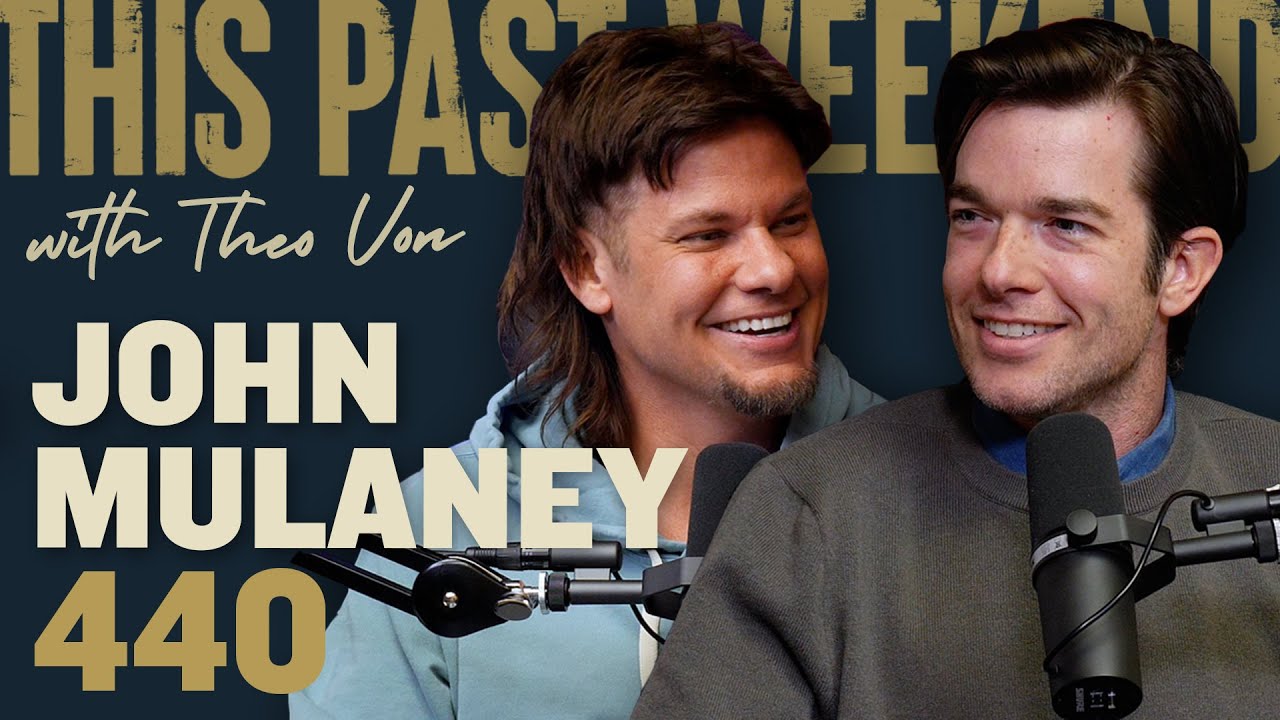
John Mulaney Tells Theo Von About the Gorilla in His Head
Two comedians who have spent serious time in the wreckage compare notes on cocaine, sobriety, and chasing the version of yourself that existed before things got dark.