John Mulaney Tells Theo Von About the Gorilla in His Head
Two comedians who have spent serious time in the wreckage compare notes on cocaine, sobriety, and chasing the version of yourself that existed before things got dark.
Listen on YouTube · Spotify · Apple Podcasts
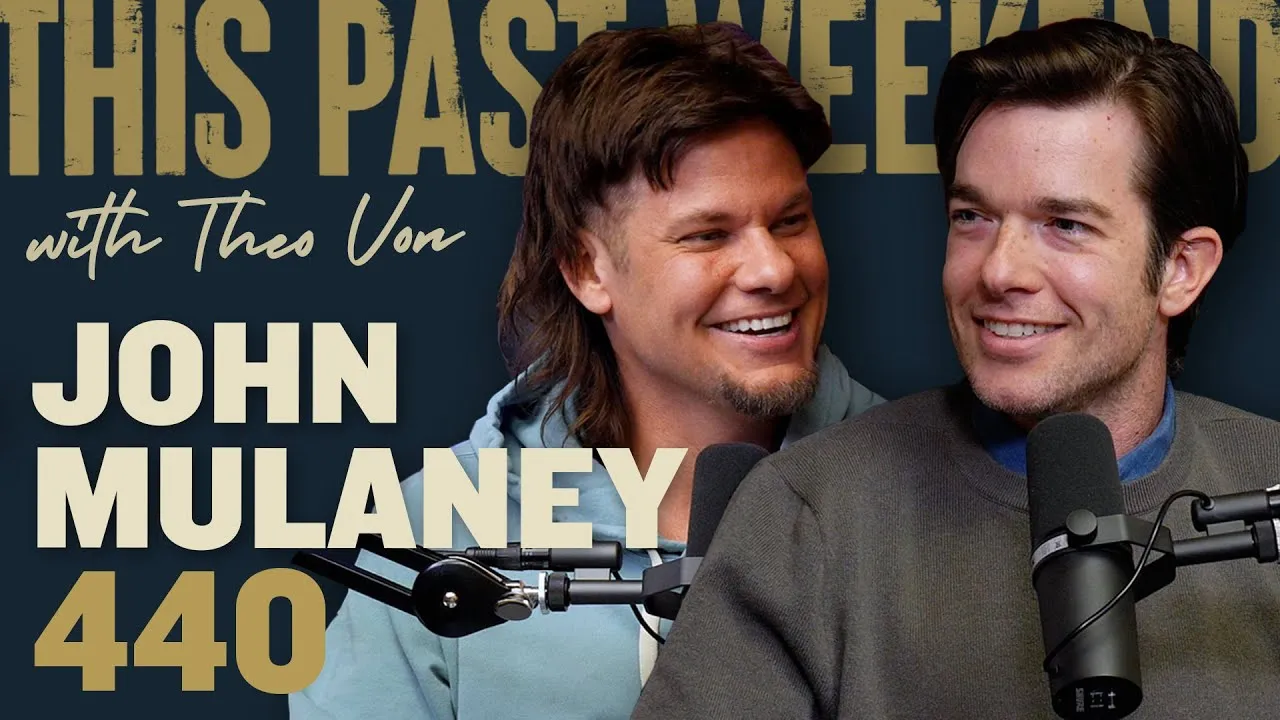 WATCH NOW↓
 John Mulaney walked into his intervention with one pocket full of Adderall and coke and the other full of Xanax and Klonopin, genuinely convinced he had finally cracked the formula. ‘I reached equilibrium,’ he tells Theo Von, finishing the sentence with the particular exhaustion of someone who has since had to explain exactly how wrong that was. This is the energy of the whole conversation: two men who have each done significant damage to themselves, sitting across from each other and laughing at the architecture of it.
Theo Von has about ten months of sobriety when they film this, and he says so without drama. Mulaney has one year, sober the following day. Neither of them makes a thing of the symmetry. They just keep talking, and the result is one of the more honest hours you will find in the podcast space, not because either man is performing vulnerability but because they share enough of the same internal wiring that neither one needs to explain the premise. The conversation proceeds on the assumption that the listener already knows what it feels like to run your life like a logistics operation in service of getting high.
The Man Who Presented Well
What Mulaney is good at describing is the gap between the performance of functionality and the thing underneath it. For a long time, he says, he could close that gap on command. He took two 30-milligram Adderalls, followed them with a Klonopin so he didn’t seem jittery, and walked onto a talk show or into a podcast and delivered. The logic was airtight, from inside the logic. He wasn’t getting high, exactly. He was just getting himself back to the baseline. The problem is the baseline kept moving.
I really thought that I was doing life. I was able to achieve at life with the drugs as opposed to in spite of them. It took me a long time over the past couple years to realize that I did well at what I do in spite of drugs not because of them.
The moment that broke the spell was a morning at Opie and Jim Norton’s radio show. Mulaney had been up all night driving a taxi cab through North Harlem while the driver was in the back seat with a sex worker, texting the same driver from the airport on the way home to see if there was any more cocaine, landing, finding a leftover line on his kitchen counter, doing it, and then going on the radio. Darryl Strawberry was the other guest. Mulaney had always assumed Strawberry was still a mess, which made the moment worse when he clocked that Strawberry had it together and Mulaney absolutely did not. His voice, the only tool he had ever really trusted, was gone. ‘I couldn’t use it,’ he says, with the flat delivery of someone who has told this story in therapy enough times to have sanded all the panic out of it.
My only gift I had in my voice. The only thing in my life I’d had to express myself was my voice. And suddenly I couldn’t use it.
Running the Video Game
One of the things Mulaney is genuinely funny about is the sheer administrative burden of being a high-functioning addict. The ATMs you have to visit before you can make a purchase. The business calls you take on mute while standing on a corner. The Craigslist ad for Adderall that he talked himself into trusting because he decided the LA County Sheriff’s Office had better things to do than stake out a recreational park for a low-volume pill sale. The dealer who worked near police stations on the theory that proximity to cops kept him safe from being robbed. The husky named Willis who would circle your car before the transaction could proceed, and who once climbed into the back seat and started crying because his owner’s mother had just died. ‘I needed to get that coat,’ Mulaney says, about the sixty seconds of sad sounds he performed while mentally running the clock.
The cocaine logic Mulaney describes is so total that it crowded out everything else. He went to a production meeting holding a bottle of Pedialyte, told the room he had a sinus infection, and promised to give a signal if he was about to pass out. He went to a benzo detox that took five or six days and left his skeleton feeling like it wanted to rip out of his body. He went to two rehabs, then sober living in central Pennsylvania in winter, because he knew if he went straight home he would tell himself he was fine and he was no longer willing to trust that voice. The intervention, the Xanax pocket, the equilibrium he thought he had achieved: none of it was fine.
Chasing the First Grade Photo
The conversation earns its length in the back section, where both men stop being funny for a while and talk about what they were actually trying to get back to. For Mulaney it was a self he could see in clips from around 2007, some version of himself with electricity in his eyes. For Theo it was something similar, a childhood he felt he missed, a door he doesn’t want to close until he can somehow get back inside it. The special is called Baby J, Mulaney explains, partly because he used his first-grade photo as the tour art and liked what it meant to see it outside the venue every night.
I heard a voice but it said we’ve been after you since you were a little kid. And I felt like something… something’s been trying to get your attention. Or to get you. And I didn’t care for the we of it.
That line lands because it is both genuinely strange and precisely right about what addiction feels like from the inside. Not a choice you made but something that had your address before you did. Mulaney didn’t care for the ‘we’ of it. Neither would you. Baby J is out April 25th on Netflix, and this conversation is a reasonable preview of what it cost to make it.
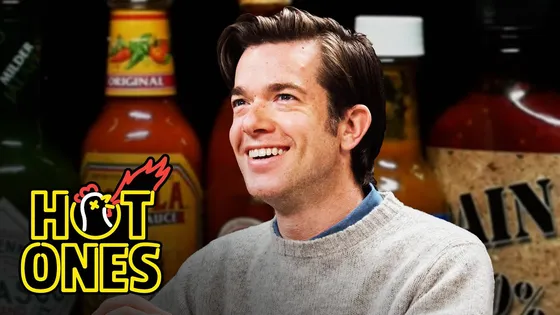
John Mulaney Ate Hot Wings at 11 a.m. and Told the Truth About Rehab
Baby J is Mulaney's best special, he says, and on Hot Ones he gave you the receipts between tears and fish-food flavors.
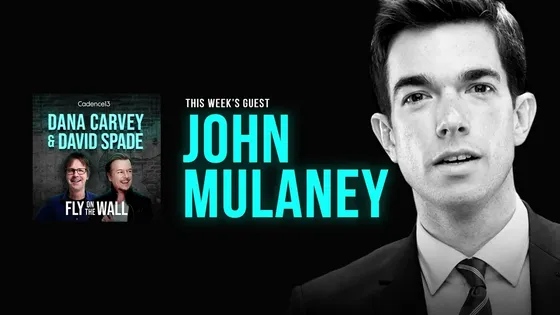
John Mulaney on Arenas, Addiction, and the SNL Writer Who Thought He Could Dress Himself
Mulaney joins Dana Carvey and David Spade to talk sobriety, Madison Square Garden, and why Mickey Rooney wanted to shoot a serial killer.
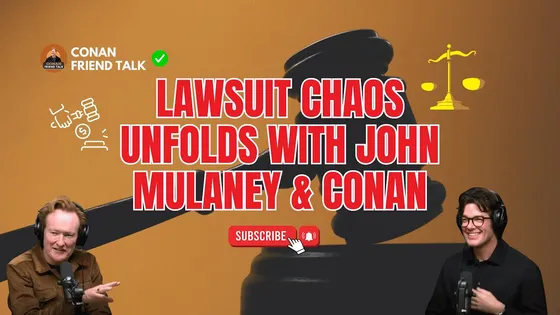
John Mulaney, John Mayer, Jimmy Carr, Jim Gaffigan, and Jim Downey Walk Into Conan's Podcast
Five guests, one episode, and a running lawsuit fantasy that somehow becomes the most coherent bit of the whole thing.
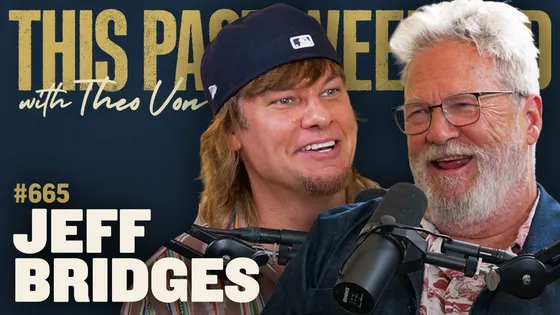
Jeff Bridges says a Big Lebowski fan theory claims Donnie never existed, and he thinks they might be right
The Dude himself has been sitting with a theory that would rewrite everything you thought you knew about bowling night.
The circuit, read weekly. No noise.